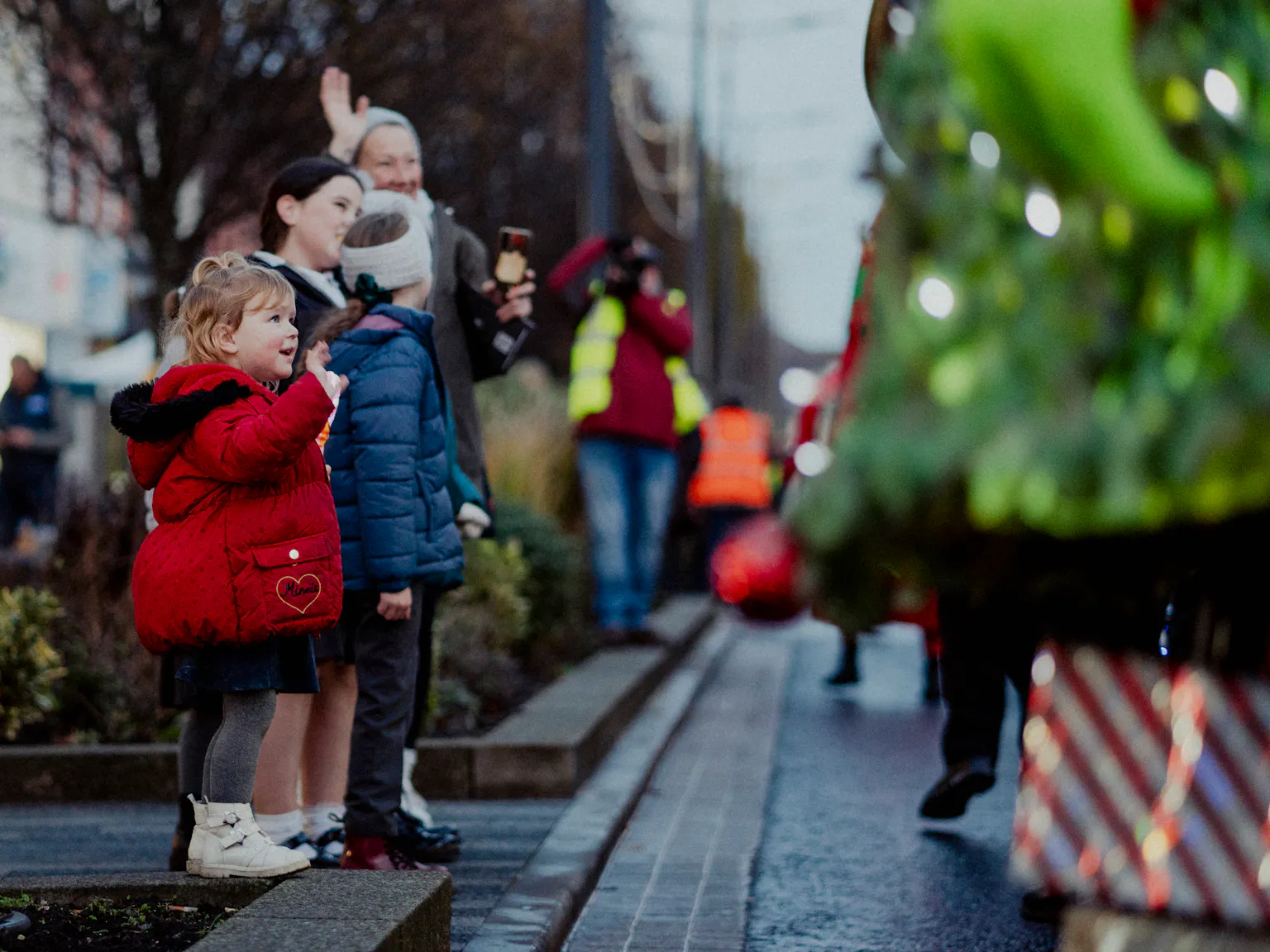

A new arts fund to support the local arts community, and an investment in arts-led events to bring the town together, are key parts of the legacy of Animating Ashington.
The year-long cultural programme in the former Northumberland mining town has changed its perception of itself, says organisers. Animating Ashington, which was funded by Northumberland Council and delivered by Walk the Plank, saw 10 events in the public realm run from November 2024 until summer 2025.
From a Toy Procession to a Feast of Fire, a major land-art commission by artist James Brunt in the public park, street art, theatre and performance, the streets and parks in Ashington became a landscape for free to access arts activity.
The cultural investment of £390,000, part of a £35m Regeneration Programme, was designed to engage with 12,000 residents and visitors in Ashington (just under half of the town’s 28k population), to bring a sense of civic pride and to deliver 10 events with “colour and excitement” to Ashington Town Centre.
In numbers, hospitality venues reported a 15-20% trading increase on event days, and both rail travel and footfall saw an increase. Over 30,000 attended the events. For every £1 invested, it saw a £2.31 return in value.
Yet for organisers it was the impact on the town and its residents that has had a profound effect.
“This is the best thing that has ever happened in Ashington, in my entire life”, said one retired resident.
In the 19th century, Ashington was dubbed “the world’s largest coal mining village,” built around the Grand Station Road shopping district and powered by the collective energy of local miners.
The town’s rich industrial heritage, including the internationally renowned Pitmen Painters, gave way to economic hardship since the decline of the coal industry in the 1970s and 1980s. While major land reclamation projects, such as the creation of QEII Country Park and the establishment of Woodhorn Museum on a former pit site, have preserved critical aspects of Ashington’s history, the town centre has struggled with vacancy, underinvestment, and low footfall.
Ashington’s children live in a local authority where about 1 in 6 children are below the poverty line before housing costs. Over half of Ashington households experience at least one form of deprivation (e.g., low pay, long-term illness, overcrowding). The North East has some of the highest child-poverty rates in England (circa 31% after housing costs), driven by both high living costs and low regional wages.